 The Ten Commandments: 9 – You shall not covet your neighbor’s wife
  The Ten Commandments: 8 – You shall not give false testimony
  The Ten Commandments: 7 – You shall not steal
  The Ten Commandments: 6 – You shall not commit adultery
  The Ten Commandments: 5 – You shall not murder
  The Ten Commandments: 4 – Honor your father and mother
  The Ten Commandments: 3 – Remember to keep holy the Lord’s Day (Sunday)
 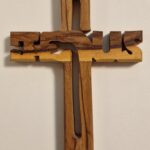 The Ten Commandments: 2 – You shall not misuse the name of the Lord your God
  The Ten Commandments: 1 – I am the Lord your God, you shall have no other gods before me
The prohibition against coveting appears twice in the Torah, nestled within the broader framework of the Ten Commandments. While the text covers a range of your neighbor’s possessions, the longing for another person’s spouse holds a uniquely destructive weight.
In the book of Exodus, the command is listed as part of a single, comprehensive verse regarding possessions:
“You shall not covet your neighbor’s house; you shall not covet your neighbor’s wife, or his male servant, or his female servant, or his ox, or his donkey, or anything that is your neighbor’s.”
Exodus 20:17
When the law is recounted in Deuteronomy, Moses separates the desire for the spouse into its own distinct instruction, emphasizing its relational sanctity:
“Neither shall you covet your neighbor’s wife. And you shall not desire your neighbor’s house, his field, or his male servant, or his female servant, his ox, or his donkey, or anything that is your neighbor’s.”
Deuteronomy 5:21
How Jesus Confirmed and Deepened the Commandment
Centuries later, during the Sermon on the Mount, Jesus showed that he arrived to fulfill the law—not by watering it down, but by stripping away legalistic loopholes and exposing its core spiritual reality. He directly tied the internal sin of coveting to the external sin of adultery.
“You have heard that it was said, ‘You shall not commit adultery.’ But I say to you that everyone who looks at a woman with lustful intent has already committed adultery with her in his heart.”
Matthew 5:27-28
Jesus confirmed that God’s law was never just a checklist of physical behaviors. By equating a lustful, possessive gaze with the act of adultery itself, Jesus raised the bar. He made it clear that the Ninth Commandment is a defensive wall around the mind, meant to stop sin at the absolute root—before it ever manifests as a physical act.
What Does “Coveting” Really Mean?
To understand this commandment, we have to define our terms. Coveting is not simply noticing that someone is attractive or acknowledging that a neighbor has a wonderful marriage.
The biblical concept of coveting implies an inordinate, obsessive desire to possess something that does not belong to you. It is a mix of envy, entitlement, and lust. It looks at someone else’s sacred bond and says, “I want that for myself, even if it tears down what God has joined together.”
That could be applicable when someone fantasizes about a colleague who is married. Equally when someone compares their own life to a friend’s marriage and home. Envy grows into bitterness; this could go as far as undermining the friend with gossip. Even without physical adultery, the covetous heart damages relationships and moral witness.
Navigating the Mind: Coping with Unwanted Thoughts
When faced with a commandment that targets the mind, it is easy to feel overwhelmed. From a psychological standpoint, we cannot fully control or prevent the initial thoughts that pop into our heads. The human brain is an automatic pattern-matching machine; an attractive person, a passing comparison, or a sudden urge often arises without our conscious permission. Trying to forcefully suppress or punish these thoughts often backfires, making them recur even more intensely (a psychological phenomenon known as Ironic Process Theory).
The ethical and spiritual battle, therefore, is not about preventing the initial spark, but about what we do next:
- Distinguish Between the First and Second Thought: The first thought (an automatic flicker of attraction or envy) is a involuntary mental reflex. The second thought (choosing to dwell on it, indulge it, or nurture a fantasy) is where coveting takes root.
- Acknowledge and Label Without Guilt: Instead of panicking or suppressing an unwanted thought, simply observe it objectively: “I notice my mind is having a thought of envy right now.” Labeling the thought takes away its emotional charge and stops it from spiraling into shame or obsession.
- Practice “Cognitive Defusion”: Treat intrusive thoughts like background noise rather than commands or absolute truths. You don’t have to fight the thought to make it leave; you simply don’t have to entertain it.
- Redirect Attention (Approach vs. Avoidance): The brain struggles with “don’t think about X,” but excels at “do Y.” When an unwanted desire arises, gently pivot your focus toward a positive action—anchoring yourself in gratitude for your own life, taking a deep breath, or refocusing on the task at hand.
Coveting is not the split-second arrival of an unwanted thought; it is the decision to give that thought a home.
Relevance in Today’s World
We live in a hyper-connected digital age, which makes the Ninth Commandment more relevant—and harder to keep—than ever.
Our world is fueled by a culture of comparison. Social media gives us unprecedented access into the curated “best moments” of other people’s lives and relationships. We swipe through pictures of happy couples on vacation, idealized anniversaries, and emotional expressions of love.
When things get tough at home, it is incredibly easy to look at a neighbor’s life through a digital screen and think, “Why can’t my spouse be like that? I deserve that kind of partner.” This is the modern face of coveting. It breeds discontentment, chips away at our commitment to our own commitments, and views other people as objects meant to satisfy our personal desires.
Furthermore, the ubiquity of online pornography and casual dating apps turns people into commodities to be consumed and discarded, directly violating the respect and honor we owe to our neighbor’s household.
Summary and Conclusion
The Ninth Commandment—You shall not covet your neighbor’s wife—is not an arbitrary restriction designed to limit our happiness. Rather, it is a protective hedge built out of profound love.
By commanding us to guard our desires, the Bible addresses the very birthplace of human action. Sin begins in the imagination. When we cultivate a heart of gratitude for what we have, rather than an obsessive longing for what belongs to another, we find true peace.
Ultimately, keeping this commandment means practicing custody of the eyes and custody of the heart. It challenges us to celebrate the joy of our neighbor’s marriage while fiercely protecting the sanctity of our own, recognizing that human relationships are sacred spaces meant to be honored, not conquered.
Further insights
Jesus himself gives much more depth to the topic than I ever could. Below is an extract from the visions of Maria Valtorta where He addresses this commandment in a speech rather at the beginning of his official journey.
«Also that young man had forgotten that there is a God Who commands honest morals. He had forgotten that it is forbidden to make for oneself gods which are not God. He had forgotten to keep the Sabbath as I taught you. He had forgotten a loving respect for his mother. He had forgotten that it is forbidden to fornicate, to steal, to be false, to covet his neighbour’s wife, to kill himself and his soul, to commit adultery. He had forgotten everything. You have seen how he was stricken.
“You shall not covet your neighbour’s wife” is linked to “You shall not commit adultery.” Lust always precedes deeds. Man is too weak to be able to crave for something without consuming his desire. And, what is exceedingly sad, man is not capable of behaving in the same way with regard to his honest desires. In evil man wishes and then fulfills his wish. In good he wishes and then stops, if he does not retreat.
Since sinful desires are widely spread like couch grass which spreads by itself, I will repeat to you all, what I said to him: are you little babies who do not know that that temptation is poisonous and is to be avoided? “I was tempted.” The old excuse! But since it is also an old example, man ought to remember its people who persevered as such notwithstanding all the allurements of sex and the threats of violent people. Is temptation evil? It is not. It is the work of the Evil One. But who overcomes it, turns it into glory.
A husband who makes love with other women, is a murderer of his wife, of his children and! of himself. Who enters his neighbour’s abode to commit adultery is a thief, and one of the most cowardly. Like a cuckoo, he enjoys somebody else’s nest, without any expense. Who deceives the good faith of a friend, is a forger, because he simulates a friendship which in fact he does not have. Who behaves thus, dishonours himself and his parents. Thus, can God be with him?
I worked the miracle for that poor mother. But I feel such disgust for lewdness, that it upsets Me. You shouted out of fear and horror for leprosy. My soul shouted out of disgust for lewdness. I am surrounded by all possible miseries and I am the Saviour of them all. But I prefer to touch a corpse, a just man whose putrified flesh has been honest and who is in peace with his soul, rather than go near anyone who smells of lust. I am the Saviour, but I am the Innocent One. That should be remembered by all those who come here or speak of Me, imputing to My person their own passions.
I realise that you would like something else from Me. But I cannot. The ruin of a youth, hardly formed and already demolished by lewdness, has upset Me more than if I had touched Death. Let us go to the sick people. Since I cannot be the Word, owing to the nausea that chokes Me, I shall be the Health of those who hope in Me. Peace be with you. »
Maria Valtorta, The Poem of the ManGod, chapter 128.Jesus at the «Clear Water»: « You Shall Not Covet Your Neighbour’s Wife. »
And here another one where Jesus teaches about the ten commandments during one of his speeches:
“This town is really beautiful. Make it beautiful also in justice and holiness. The hills, the stream, the green plain were given to you by God. Rome is now helping you to have homes and beautiful buildings. But it is up to you only to have your town called holy and just. A town is what its citizens make it. Because a town is a part of society closed within its walls, but it is the citizens that make the town. A town in itself does not commit sin. The stream, the bridge, the houses, the towers cannot sin. They are matter, not souls. But those who are within the town walls, in houses, shops, those who cross the bridge or bathe in the stream they can all sin. If a town is factious and ruthless, people say: “It is a very bad town.” But that is wrong. It is not the town, it is the citizens who are very bad. Those individuals by joining together become one complex thing, as well as one thing only, which is called “town.” Now listen. If in a town ten thousand inhabitants are good, and only one thousand are not good, can we say
that that town is wicked? No, we cannot. Likewise: if in a town of ten thousand inhabitants there are many parties and each struggles to favour his own, can we say that that town is still united? No, we cannot. And do you think that that town will thrive? No, it will not.
You people of Gerasa are now all united striving to make your town great. And you will succeed because you all want the same thing and you vie with one another in achieving your purpose. But if tomorrow opposed parties should arise among you and one said: “No, it is better to expand eastwards” and another party said: “Not at all. We will build in the north where the plain is”, and a third one should say: “Neither here nor there. We all want to live close together in the centre, near the river”, what would happen? It would happen that the work you have started would stop, those who have lent capitals would withdraw them, those who intended to settle here would go to another town with more agreeable people, and what you have already done would go to rack and ruin, as it would be exposed to the inclemency of the weather, before being completed, as a result of the quarrels of citizens. Is that right or not? You say it is, and you are right. So the harmony of the citizens is required for the welfare of the town, and consequently of the citizens themselves, because the welfare of a society is the welfare of its members.
But there is not only the society of which you are thinking, the society of citizens, of fellow-countrymen, or the little dear family society. There is a vaster society, an infinite one: the society of spirits.
Each living man has a soul. The soul does not die with the body, but survives forever. The idea of God, the Creator, who gave each man his soul, was that all the souls of men should be gathered in one place only, in Heaven, forming the Kingdom of Heaven, whose monarch is God and whose blissful subjects were to be all men, after a holy life and a placid limbo of expectancy. Satan came to divide and upset, destroy and grieve God and spirits. And he set sin in the hearts of men and with sin he brought death to the body at the end of its existence, hoping to give death to spirits as well. But the death of spirits is their damnation, which is still existence, but devoid of what is true life and eternal joy, that is, devoid of the beatific vision of God and of His eternal possession in eternal light. And Mankind became divided in its desires, like a town divided by opposed parties. And it was thus brought to ruin. I said elsewhere to those who were accusing Me of expelling demons with the assistance of BeeIzebub: “Every kingdom divided in itself will be brought to ruin.” In fact if Satan
expelled himself, he and his gloomy kingdom would ruin.
I have come, for the love that God has for mankind created by Him, to remind people that one Kingdom only is holy: the Kingdom of Heaven. And I have come to preach it, so that the better people may go towards it. Oh! I would like everybody, even the worst ones, to come to it, becoming converted, freeing themselves from the demon who keeps them enslaved, either openly, through corporal and spiritual possession, or secretly through a mere spiritual one. That is why I move about curing sick people, expelling demons from possessed people, converting sinners, forgiving in the name of the Lord, preaching the Kingdom, working miracles to convince you of My power and prove that God is with Me. Because no one can work a miracle unless God is his friend. So if I expel demons with the power of God, and I cure sick people, I cleanse lepers, convert sinners, announce and preach the Kingdom and I call people to it in the name of God, and God’s compliance with Me is clear and indisputable, so that only disloyal enemies may assert the contrary, it is a sign that the Kingdom of God is among you and must be established because the hour of its foundation has come.
How is the Kingdom of God established in the world and in hearts? By going back to the Mosaic Law or by becoming acquainted with it if one is ignorant of it and, above all, by abiding by it absolutely, in every event and moment of our life. Which is that Law? Something so severe as to be impracticable? No. It is a set of ten holy easy precepts, which even a really morally good man feels he must respect, even if he lives in the most impervious forest of mysterious Africa. It says: “I am the Lord Your God, you shall have no gods except Me.
You shall not utter the name of God in vain.
You shall keep the Sabbath according to the commandment of God and to the needs of the human body.
Honour your father and mother so that you may have a long life and be blessed both on the earth and in Heaven.
You shall not kill.
You shall not steal.
You shall not commit adultery.
You shall not bear false witness against your neighbour.
You shall not covet your neighbour’s wife.
You shall not covet your neighbour’s goods.”
Which good natured soul, contemplating what is around him, even if he is a savage, will not say: “All this was not formed by itself. Therefore there must be One, more powerful than nature and than man himself, who made this”? And he worships the Powerful One Whose Most Holy Name he may or may not know, but he feels He must exist. And he has such reverence before Him, that when he utters the name which he has given Him or has been taught to utter to name Him, he trembles with respect and he feels that he prays when uttering it reverently. In fact it is a prayer to utter the Name of God with the intention of worshipping Him or making Him known to those who do not know Him.
Likewise, out of moral prudence alone every man feels that he must grant some rest to his limbs, so that they may resist as long as his life lasts. By deeper reason, a man who knows the God of Israel, the Creator and Lord of the Universe, feels that he must consecrate his bodily rest to the Lord, so that he may not be like a beast of burden which rests, when tired, on litter crushing fodder with its strong teeth.
Blood also calls for love for those from whom we originate, as we can see in that colt that is now running braying towards its mother which is coming from the market. It was playing in the herd, it saw its mother, it remembers it was fed by her and licked with loving care, defended and warmed by its mother, and see? It rubs her neck with its tender nostrils and jumps joyfully rubbing its young crupper against the sides that carried it. It is a duty and a pleasure to love one’s parents. And there is no animal which does not love the mother which gave birth to it. What? Will man be more vile than worms living in mud?
A morally good man does not kill. He has a strong dislike of violence. He feels that it is not lawful to take anybody’s life, and that God only, Who gave it, has the right to take it. He abhors homicide.
Likewise, he who is morally sound does not take advantage of other people’s property. He prefers to eat plain bread with a clear conscience near a silvery fountain, rather than have a rich roast which is the fruit of a theft. He prefers to sleep on the ground with his head on a stone and friendly stars above him, pouring peace and comfort on his honest conscience, rather than toss about in a stolen bed.
And if he is morally sound, he is not eager for more women, which are not his, and he will not cowardly disgrace the nuptial bed of his neighbour. And he will consider his friend’s wife as a sister and will not cast lustful glances at her, as no one does at a sister.
A man with a righteous soul, even if only naturally righteous, with no other knowledge of Good but what comes to him from his honest conscience, will never take the liberty of giving false witness, as he would consider that the same as homicide and theft, which it is. But his lips are as honest as his heart, and his glances are honest, so he does not desire his neighbour’s wife. He does not crave for anything, as he knows that that is the first incentive to sin. And he is not envious. Because he is good. A good man is never envious. He is happy in his lot.
Do you think that this law is so exacting as to be impracticable? Do not wrong yourselves! I am sure that you will not do that. And if you do not, you will establish the Kingdom of God within yourselves and in your town. And you will be happily joined one day to those whom you loved and who like you have gained the eternal Kingdom in the everlasting joy of Heaven.
But we have within us passions, which are like citizens closed within the circle of town walls. It is necessary for all the passions of men to want the same thing: that is, holiness, Otherwise some will tend to Heaven in vain, if others leave the doors unguarded and let the seducer enter or counteract the actions of part of the spiritual citizens through disputes or laziness, making the interior part of the town perish and abandoning it to nettles, poison, couchgrass, snakes, scorpions, mice and jackals, and owls, that is, to wicked passions and to Satan’s angels. You must be unceasingly vigilant, like sentries placed at the walls, to prevent the Evil one from entering where we want to build the Kingdom of God.
I solemnly tell you that as long as the strong man watches in arms the hall of his house, he is sure of everything which is in it. But if one stronger than he is comes, or if he leaves the door unguarded, then the stronger man will defeat him and disarm him, and when he is deprived of the weapons on which he relied, he loses heart and surrenders and the stronger man makes him a prisoner and takes his spoils. But if man lives in God, through loyalty to the Law and justice practised holily, God is with him, I am with him, and no harm can befall him. Union with God is the weapon which no strong man can overcome. Union with Me is certainty of victory and of abundance of eternal virtues through which he will be given an eternal seat in the Kingdom of God. But he who turns his back on Me or becomes My enemy, rejects thereby the weapons and certainty of My Word. He who rejects the Word, rejects God. He who rejects God invokes Satan. He who invokes Satan destroys what he had to conquer the Kingdom.
Therefore, he who is not with Me is against Me. And he who does not cultivate what I have sown, will reap what the Enemy has sown. He who does not harvest with Me, dissipates and will be poor and nude when he comes to the Supreme Judge, Who will send him to the master to whom he sold himself by preferring BeeIzebub to Christ.
Citizens of Gerasa: build the Kingdom of God within yourselves and in your town.»
Maria Valtorta, The Poem of the ManGod, chapter 287. Preaching at Gerasa
And here another one related to this commandment:
“Listen. A man who had been away from home for a long time on business,
unfaithful to him, to the extent of giving birth to a child, who could not be of her husband, as he had been away for fourteen months. The man killed his wife secretly. But he was denounced by a man who had been informed by the maid-servant and was killed, according to the law of Israel. The lover, who according to the Law should be stoned, has taken shelter at Kedesh and he will certainly try to go to other places. The illegitimate child, whom the husband wanted to kill as well, was not handed to him by the woman who suckled him and she went to Kedesh to excite the pity of the true father and convince him to take care of his son, because her husband is opposed to keeping the illegitimate child in his house. But the man rejected her and his son stating that the latter would be a hindrance to him in his flights. What is Your opinion on the matter?»
« I do not think that it can be judged any more. All judgement, whether right or wrong, has already been given.»
« Which judgement, according to You, is just and which is unjust. There is disagreement among us concerning the punishment of the murderer.»
Jesus stares at them, one after the other. He then says: « I will speak. But first answer My questions, whatever their weight may be. And be sincere. Did the man who murdered his wife belong to this town?»
« No. He settled here when he married the woman who is from here.»
« Did the adulterer come from here?»
« Yes, he did.»
« How did the man find out that his wife had been unfaithful to him? Was their sin known in public?»
« Not really, and we do not know how the man was able to find out. The woman had been away for months saying that, as she did not want to be all alone, she was going to Ptolemais to stay with some relatives, and she came back saying that she had brought with her the little son of a relative of hers who had died.»
« When she was in Giscala was her behaviour impudent?»
« No. In fact we were all surprised to hear that Marcus had an affair with her.»
« My relative is not a sinner. He is accused but he is innocent » says one of the three men who had never spoken so far.
« Was he a relative of yours? Who are you?» asks Jesus.
« The first of the Elders of Giscala. That is why I wanted the life of the murderer, because he not only killed, but he killed an innocent » and he looks sullenly at the third man, who is about forty years old and who replies: « The Law says that the murderer is to be killed.»
« You wanted the lives of the woman and of the adulterer.»
« That is the Law.»
« Had there been no other reason, no one would have spoken.»
The dispute becomes animated and the two antagonists almost forget about Jesus. But the one who was the first to speak, the oldest man, imposes silence saying impartially: « It is not possible to deny that a homicide has been committed, neither can one deny that there has been a fault. The woman confessed it to her husband. But let the Master speak.»
« I say: how did the husband find out? You have not answered My question.» The man defending the woman says: « Because someone spoke as soon as the husband came back.»
« In that case I say that his soul was not pure » says Jesus lowering His eyelids to veil His eyes so that they may not accuse.
But the forty year old man who wanted the death of the woman and of the adulterer exclaims: « I did not hunger for her.»
« Ah! it is clear now! It was you who spoke! I suspected that, but now you have betrayed yourself! Assassin!»
« And you are an accomplice of the adulterer. If you had not warned him, he would not have escaped us. But he is your relative! That is how justice is done in Israel! That is why you are defending also the memory of the woman: to defend your relative. If she were the only one involved, you would not worry about her.»
« And what about you, who hurled the man against the woman to take vengeance for her refusals?»
« And what about you, the only witness against the man, and you paid a maid-
That’s the Law.» A terrible uproar!
Jesus and the old man try to calm the two men who represent two opposed interests and trends and who reveal an incurable hatred of two families. They succeed with some difficulty and Jesus now speaks calmly and solemnly, after defending Himself from the accusation of one of the two opponents, who said: « You Who protect prostitutes…»
« I not only say that consummated adultery is a crime against God and one’s neighbour, but I say: also he who craves lustfully for the wife of another man commits adultery in his heart and commits a sin. It would be dreadful if every man who has craved for the wife of another man should be put to death! Lapidators would need to have stones in their hands all the time. But if the sin often remains unpunished on the Earth, it will be expiated in the next life, because the Most High said: “You shall not commit adultery and you shall not covet your neighbour’s wife”., and God’s word is to be obeyed. But I also say: “Woe betide him who is the cause of scandal and him who informs against his neighbour”. In this case everybody is guilty. The husband: was it really necessary for him to leave his wife for such a long time? Did he always treat her with the love that conquers the heart of a companion? Did he examine himself to ascertain whether the woman had not been offended by him before he was offended by her? The law of retaliation says: “An eye for an eye, a tooth for a tooth”. But if it says so to exact amends, are these to be given by one only? I am not defending the adulteress. But I say: “How many times could she have accused her husband of that sin?” »
The people whisper: « It is true! It is true!» and also the old man from Giscala and Gamaliel’s disciple agree.
Jesus goes on: « … I say: why did he, who caused such a tragedy out of revenge, not fear God? Would he have liked all that to happen in his family? I say: the man who ran away and who after enjoying himself and causing ruin now disowns also the innocent child, does he think that by fleeing he will escape the eternal Avenger? That is what I say. I also say: the Law exacted the lapidation of adulterers and the killing of murderers. But the day will come when the Law, necessary to control the violence and lust of men not fortified by the Grace of the Lord, will be modified, and if the commandments: “You shall not kill and you shall not commit adultery” remain, the sanctions against such sins will be referred to a higher justice than that of hatred and blood. A justice, compared with which, the surviving ever false undeserving justice of human judges, all of whom are adulterers, and perhaps several times adulterers, if not even killers, will be less than nothing. I am speaking of the justice of God Who will ask men also the reason for lustful desires which are the causes of revenge, delations, murders, and above all will ask them why they deny guilty people time to redeem themselves and why they compel innocent people to bear the burden of other people’s faults. They are all guilty in this case. Everybody. Also the judges urged by opposing reasons of personal revenge. One only is innocent. And My pity is for him. I cannot go back. But which of you will be charitable to the baby and to Me Who am suffering for him?» Jesus looks at the crowd with eyes expressing sad prayer.
Many say: « What do You want? Remember: he is illegitimate.»
« There is a woman in Capernaum whose name is Sarah. She comes from Aphek. She is one of My disciples. Take the child to her and say: “Jesus of Nazareth entrusts him to you”. When the Messiah, Whom you are expecting, establishes His Kingdom and issues His laws, which do not cancel the Word of Sinai but they complete it through charity, illegitimate children will no longer be motherless, because I shall be the Father of those who have no father and I will say to My believers: “Love them for My sake”. And other things will be changed, because violence will be replaced by love.
Perhaps you were expecting Me to deny the Law when you questioned Me. And that is why you were looking for Me. Say to yourselves and to those who sent you that I came to perfect the Law, not to deny it. Say to yourselves and to the others that He Who preaches the Kingdom of God cannot certainly teach what in the Kingdom of God would be horror and consequently could not be accepted there. Say to yourselves and to the others that you must remember Deuteronomy: “The Lord your God will raise up for you a prophet from your country, from your brothers. Listen to him. This is what you asked of the Lord your God at Horeb and you said: ‘Do not let me hear again the voice of the Lord my God, nor look any longer on this great fire and I may not die’. And the Lord said to me: ‘They have spoken well and I will raise up a prophet like yourself for them from their own brothers and I will put My words into his mouth and he shall tell them all I command him. And if anyone does not listen to the words that he speaks in My name, I will avenge Myself on him’”.
God sent His Word to you that He might speak without killing you with His
voice. God had already said so much to man and it was more than man deserved to hear from God. So much was said by means of the Law of Sinai and through the Prophets. But so much was still to be said and God kept it for His prophet of the time of Grace, for the One Promised to His people, in Him is the Word of God and through Him forgiveness will be accomplished. Founder of the Kingdom of God, He will codify the Law with new precepts of love, because the time of love has come. And He will not ask the Most High for vengeance on those who do not listen, but He will only beg that the fire of God may melt the hearts of stone and the Word of God may penetrate them and found in them the Kingdom which is the Kingdom of the spirit, just as its King is a spiritual King. To whoever loves the Son of man, the Son of man will give the Way, Truth, Life to go to God, to know Him and to live the eternal Life. Sources of light will be opened in whoever accepts My word, so that they may know the concealed meaning of the words of the Law and they may see that prohibitions are not threats but invitations of God, Who wants men to be happy, not damned, to be blessed, not cursed.
Once again you have made use of a question already resolved, but not as holiness would have resolved it, but as an inquisitive instrument to catch Me in sin. But I know that I am not sinning. And I am not afraid to speak My mind, which is: for making profit the aim of his life, the murderer has paid first with disgrace and then with death. The woman has paid for her sin with her death and this will surprise you but it is the truth − her confession to convince her husband to have pity for the innocent child, has diminished in the eyes of God the weight of her sin. The others: you and you, and he who fled with no pity even for his own child, are more guilty than the first two. Are you grumbling? You have not paid with your lives, neither have you the extenuating circumstances of the husband of the adulteress or those of the woman for being neglected and for her confession.
You have all committed a sin, all of you with the exception of the wet-nurse of the innocent child: the sin of rejecting the innocent like a shameful evil. You were able to kill the homicide. You would have been able to kill also the adulterers. You have been able to do and would have been able to do what is severe justice. But not one has been or is able to stretch out his arms and have pity for the innocent child. But you are not fully responsible. You do not know… You never know exactly what you do and what ought to be done. And that is your excuse. When this disciple of Gamaliel came to Me, he said: “Come. They want to consult You with regard to a fact the consequences of which are still lasting”. The consequences are the innocent child. Well, now that you are aware of My opinion, are you going to change your judgement where it is still changeable?
I said to this man: “I do not judge. I forgive”. Gamaliel said: “Only Jesus of Nazareth would judge with justice in this case”. I, as I told this man, would have advised everybody, I say everybody, not to strike until the matter had been carefully examined and passions had subsided. Many things could have been changed without infringing the Law. The matter is over now. And may God forgive those who repented or will repent. I have nothing else to say. Or rather, I have still one thing: may God forgive you once again for tempting the Son of man.»
Maria Valtorta, The Poem of the ManGod, chapter 470. A Judgement of Jesus
Photo by the author in Hagia Sophia, Istanbul