 Why Does God Allow Bad Things to Happen?
  The Ten Commandments: 10 – You shall not covet your neighbor’s goods
 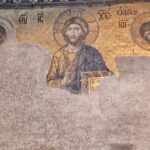 The Ten Commandments: 9 – You shall not covet your neighbor’s wife
  The Ten Commandments: 8 – You shall not give false testimony
  The Ten Commandments: 7 – You shall not steal
  The Ten Commandments: 6 – You shall not commit adultery
  The Ten Commandments: 5 – You shall not murder
  The Ten Commandments: 4 – Honor your father and mother
  The Ten Commandments: 3 – Remember to keep holy the Lord’s Day (Sunday)
In scripture we read:
“You shall not murder.”
Exodus 20:13
At first glance, the fifth commandment appears simple and direct: a prohibition against taking another person’s life. However when thinking more about it, questions arise on its scope. For example, is this also applicable in wartime – especially as King David, according to scripture, killed many people and God did still love him. How about self defense? And are there not many other ways to “murder” someone e.g. through character assassination and thus speaking bad about someone?
More Than the Prohibition of Killing
In Exodus 20:13, the Hebrew verb used ($רָצַח$, ratsach) specifically refers to unlawful killing—intentional, malicious murder. It is distinct from other Hebrew words used for killing in battle or judicial execution. This distinction explains why figures like King David could be “a man after God’s own heart” despite being a warrior; scripture distinguishes between the blood shed in authorized warfare and the “bloodguilt” of premeditated murder (such as David’s later sin against Uriah).
Similarly, the commandment does not forbid the preservation of life through self defense. Traditional biblical interpretation suggests that protecting a life from an immediate threat is an act of stewardship over the “image of God,” rather than a violation of this law. It is a clear moral boundary protecting human life from malice.
Why such clarity? Because human life is not merely biological existence—it is sacred. In Genesis 1:27, we are told that humanity is created in the image of God. To murder, therefore, is not only an act against a person, but an assault on the image of God Himself.
Jesus Deepens the Command
In the Sermon on the Mount, Jesus takes this command further than outward behavior.
“You have heard that it was said to the people long ago, ‘You shall not murder, and anyone who murders will be subject to judgment.’ But I tell you that anyone who is angry with a brother or sister will be subject to judgment. Again, anyone who says to a brother or sister, ‘Raca,’ is answerable to the court. And anyone who says, ‘You fool!’ will be in danger of the fire of hell.”
Matthew 5:21–22 (FYI ‘Raca’ is an Aramaic term of contempt)
By connecting anger and insults (like “Raca”) to murder, Jesus confirms that we can indeed destroy a person without ending their physical life. Character assassination, slander, cruel mockery and malicious speech can become a form of “murder” and the “death” of a person’s reputation are seen as violations of the spirit of this law. Those attack a person’s dignity, and place within the community. Jesus shifts the focus from the act of murder to the condition of the heart. Anger, contempt, and hatred are the seeds from which violence grows.
When Jesus says that even anger puts a person “in danger of judgment,” He is not equating anger with murder in consequence, but in moral direction. The commandment is not only about restraining the hand—it is about transforming the heart.
This reframes the commandment entirely. It is not enough to say, “I have never killed anyone.” The deeper question becomes: Do I harbor resentment? Do I use my tongue to “kill” the dignity of others? Do I nurture hostility?
The Sanctity of Life in Today’s World
In our modern context, the commandment speaks powerfully into several areas:
- Violence and war: While societies still wrestle with questions of justice and defense, the commandment reminds us that even in “just” conflicts, the loss of life is a tragedy and violence is never to be glorified.
- Speech and relationships: Words can wound deeply. Slander, verbal abuse, character assassination and verbal abuse are “bloodless” forms of murder that destroy a person’s spirit and place in the community.
- Neglect and indifference: The command not to murder also challenges passive forms of harm. Ignoring the suffering of others, tolerating injustice, or failing to act when life is threatened can contradict the command’s deeper intent.
- Inner life: In a culture that often normalizes outrage and division, Jesus’ teaching calls believers to examine their inner attitudes. Bitterness and contempt are not spiritually neutral—they erode love.
A Call to Protect and Restore Life
Ultimately, the fifth commandment is not only a prohibition—it is a calling. To obey it fully is to become a protector of life. This means promoting peace, practicing forgiveness, and actively seeking reconciliation.
The Apostle Paul echoes this when he writes, “If it is possible, as far as it depends on you, live at peace with everyone” (Romans 12:18). The commandment, then, is fulfilled not only by avoiding harm but by cultivating life-giving relationships.
Conclusion
“You shall not murder” is far more than a legal restriction; it is a window into God’s heart for humanity. It calls us to honor the sacredness of every person, to confront the roots of anger within ourselves, and to become agents of peace in a fractured world.
In obeying this commandment, we reflect the character of a God who gives life—and who desires that life to flourish.
Further insights
Jesus himself gives much more depth to the topic than I ever could. Below is an extract from the visions of Maria Valtorta where He addresses this commandment in a speech rather at the beginning of his official journey:
Jesus says:
« It is said: “You shall not kill.” To which of the two groups of commandments does this one belong? Are you saying: “To the second”? Are you sure? I will ask you another question: is it a sin which offends God or the man who has been struck? You say: “The man who has been struck”? Are you sure also of that? And another question: is it only a sin of homicide? By killing a person does one commit but this one sin? You say: “Only this one”? Does no one doubt it? Give Me your answers in a loud voice. Let one speak on behalf of everybody. I will wait. » And Jesus bends to caress a little girl who has come near Him and looks at Him enraptured, forgetting to nibble at the apple that her mother gave her to keep her quiet.
A stately old man stands up and says: « Listen, Master. I am an old synagogue leader and I have been asked to speak on behalf of everybody. And I am going to speak. I think, we all think, that we have replied according to justice and according to what we have been taught. My certainty is based on the Law concerning homicide and blows. But You know why we have come: to be taught, as we know that You are Wisdom and Truth. If, therefore, I am wrong, enlighten my darkness, that the old servant may go to his King clad in light. And similarly, enlighten also these people who belong to my flock and have come with their shepherd to drink at the source of Life and before sitting down, he bows with the greatest respect. »
« Who are you, father? »
« Cleopas, of Emmaus, Your servant. »
« Not Mine: of Him Who sent Me, because the Father is to be given all priority and all love in Heaven, on the earth and in hearts. And the first to give Him this honour is His Word, Who, on the faultless table takes and offers the hearts of good people, as the priest does with the bread of the proposition. But listen, Cleopas, that you may go to God enlightened as is your holy desire.
When judging a fault, it is necessary to take into consideration the circumstances that precede, prepare, justify and explain the fault. A man who has committed murder, before presenting himself to God to ask forgiveness, must ask himself:
“Whom did I strike? What did I strike? Where, with what means, why, how, when did I strike?”
“Whom did I strike?”
A man. I say: a man. I do not consider whether he is rich or poor, free or a slave. As far as I am concerned, there are neither slaves nor mighty ones. There are only men, created by One God, therefore, they are all equal. In fact, also the most powerful king on the earth is dust before the majesty of God. And in His eyes, as well as in Mine, there is only one slavery: sin, and therefore a slavery under Satan. The old Law discriminates between free men and slaves, and subtilises between killing with one blow and killing when the person struck survives for a day or two and likewise, whether a pregnant woman is killed by blows or only the fruit of her womb dies. But that was said when the light of perfection was still far away. Now it is amongst you and says: “Who kills his fellow creature commits a sin.” And he sins not only against man, but also against God.
What is man? Man is the sovereign creature whom God created to be the king of creation and He created him in His image and likeness, giving him His likeness according to the spirit, and His image by drawing his perfect image from His perfect thought.
Look at the air, at the earth, at the seas. Can you see an animal or a plant, however beautiful it may be, which is equal to man? Animals run, eat, drink, sleep, procreate, work, sing, fly, creep, climb. But they do not speak. Man can also run and jump and is so fast that he seems a fish; he can creep and looks like a reptile; he climbs like a monkey; he can sing like a bird. He can procreate and reproduce. And, besides, he can speak.
Do not say: “Every animal has its language.” True, one moos, another bleats, another brays, another chirps, another warbles, but the last bull will bellow exactly the same as the first one, and so sheep will bleat until the end of the world, and donkeys will always bray like the first one, and sparrows will always chirp, whilst the lark and the nightingale will sing their songs: the former to the sun, the latter to a starry night, also on the last day of the world, exactly as they greeted the first sun and the first night. Man, instead, having not only a voice and a tongue, but also a nervous system, the centre of which is the brain, the seat of intelligence, is capable of perceiving new sensations, meditating on them and giving them names.
Adam called dog his friend and gave the name of lion to the animal that seems most like it because of its mane round its short-bearded face. He called sheep the lamb that greeted him mildly and gave the name of bird to the beautiful flower of feathers that flies like a butterfly but sings a sweet song that a butterfly cannot sing. And later, throughout centuries, the children of Adam created new names, as and when they “became acquainted” with the works of God in His creatures, or, through the divine spark which is in man, they not only procreated children, but they also created things which were useful or harmful to their children, according to whether they were with God or against God. Those who create and do good things are with God. Those who create wicked things, harmful to their neighbours, are against God. God avenges His children tortured by man’s wickedness.
Man is thus the favored creature of God. Even if he is now guilty, he is still the dearest creature to Him. That is witnessed by the fact the He sent His own Word, not an angel, not an archangel, not a cherub, not a seraph, but His own Word, clad with human flesh, to save man. He did not deem that flesh unworthy to make Him liable to suffer and expiate, Who being a Most Pure Spirit Himself, could not have suffered and expiated the sin of man.
The Father said to Me: “You shall become man: the Man. I made one. He was as perfect as everything I make. He was destined to a peaceful life, a most peaceful final sleep, a happy awakening and a most happy eternal life in My celestial Paradise. But You know that nothing contaminated may enter our Paradise, because there I-We, One and Trine God, have Our throne. Only holiness is allowed to stand before it. I am He Who I am. My divine nature, Our mysterious being can be known only to those who are without sin. Now man, in Adam and through Adam, is foul. Go. Cleanse him. I want it. From now on You shall be the Man. The First-Born. Because You will be the first to enter here with mortal flesh deprived of sin, with a soul deprived of the original sin. Those who have preceded You on the earth and those who will come after You, will receive life through Your death of a Redeemer. Only one who was born can die.” I was born and I will die.
Man is the favoured creature of God. Now tell Me: if a father has many children, but one is his darling, the apple of his eye, and that one is killed, will that father not suffer more than he would have suffered if another son had been killed?
That should not happen because a father should be just to all his children. But it happens because man is not perfect. God can do so with justice because man is the only creature, amongst all created things, who has a spiritual soul in common with his Creator Father, an undeniable sign of his divine paternity.
If one kills the son of a father, does one offend only the son? No. One offends also the father. One offends the son in his flesh and the father in his heart. Both are wounded. By killing a man, does one offend only the man? No. Also God.
Man in his flesh, God in His right. Because life and death are to be given and taken by Him only. To kill is to do violence to God and to man. To kill is to enter God’s domain. To kill. is to go against the commandment of love. Who kills does not love God, because he dissipates one of His works: a man. Who kills does not love his neighbour, because he takes away from his neighbour what a murderer wants for himself: life.
I have thus replied to the first two questions.
“Where did I strike?”
One can strike in the street, in the house of the person assaulted, or by alluring the victim to one’s own home. One can strike either one or another organ causing a more severe pain, or committing two homicides in one, by striking a woman whose womb is bearing its fruit.
One may strike in the street unintentionally. An animal that gets out of our hands may kill a passer-by. In which case there is no premeditation. But if a man, armed with a dagger and wearing refined dissembling clothes, goes to the house of his enemy – and often an enemy is a person whose only fault is to be better – invites him to his own house under the pretext of honouring him, and then cuts his throat and throws him into a well, then there is premeditation and his guilt is complete in malice, ferocity and violence.
If I kill a mother and her child, then God will ask me to account for two deaths. Because the womb that gives birth to a man according to the commandment of God is sacred and sacred is the young life that grows within it, to whom God has given a soul.
“By which means did I strike?”
In vain one says: “I did not intend to strike” if he went armed with an accurate arm. In a fit of anger, also one’s hand may become a weapon, or a stone picked off the ground, or a branch taken from a tree. But who inspects his dagger or an axe, with cold determination, and sharpens it if he thinks that it is not sharp enough, then conceals it safely on his body so that, although it is not seen, it may be easily grasped, and being thus ready goes to his enemy, cannot certainly say: “I did not intend to strike.” Who prepares a poison picking poisonous herbs and fruits, makes a powder or drink with them which he then offers to the victim as spices or as cyder, cannot certainly say: “I did not want to kill.”
And now listen, you women, tacit unpunished murderesses of so many lives. It is also murder to detach a fruit that is growing in a womb, because it is of a guilty seed, or because it is an embryo which is not wanted, being a useless burden to your bodies and your wealth. There is only one way not to have that burden: by being chaste. Do not join homicide to lust, violence to disobedience, and do not think that God does not see, simply because man does not see. God sees everything and remembers everything. You ought to remember that, too.”
“Why did I strike?”
Oh! for how many reasons! The sudden mental turmoil which causes in you a violent emotion, such as finding your nuptial bed polluted, or a thief at home, or a dirty fellow intent on doing violence to your young daughter, the cold premeditated planning to get rid of a dangerous witness, of someone who encumbers your way, or of someone at whose position or purse you aim; those are some of the many reasons. And if God can still forgive who in a painful derangement becomes a murderer, He will not forgive who becomes such through lust for power or for men’s esteem.
Always behave properly and you will fear nobody’s eye or word. Be happy with what you possess, and you will not aspire to other people’s property, to the extent of becoming murderers in order to have what belongs to your neighbour.
“How did I strike?”
Being pitiless also after the first impulsive outburst? Sometimes man cannot control himself. Because Satan throws him into evil as a slinger hurls a stone.
But what would you say of a stone, which, after reaching its target, should fly back by itself to the sling, to be hurled again and strike once more? You would say: “It is possessed of a magic hellish power. And such is man, when after the first blow he strikes a second, a third, a tenth time, with unbridled ferocity.
Because wrath abates and reason takes over after the first outburst, if it is an outburst caused by a justifiable reason. Whereas ferocity increases the more the victim is struck by a genuine murderer, that is, by a satan, who does not feel and cannot feel pity for a brother because, being satan, he is hatred personified.
“When did I strike?”
During the first outburst? After it had subsided? Pretending I had forgiven whereas my grudge grew more and more? Did I perhaps wait for years before striking, to cause double pain by killing the father through his children? You can see that by killing one offends the first and second group of commandments.
Because you unduly claim the right of God and you oppress your neighbour. It is therefore a sin against God and against your neighbour. You do not only commit a sin of homicide. But you commit a sin of wrath, of violence, of pride, of disobedience, of sacrilege, and sometimes, if you kill to steal a position or a purse, of greed. I will only mention this now, and I will explain it to you in greater detail some other day, one does not commit homicide only by means of a weapon or poison. But also by slander. Meditate on that.
Maria Valtorta, The Poem of the ManGod, chapter 126 Jesus at the «Clear Water»: « You Shall Not Kill. » Death of Doras.
Further on we read the following:
“Let your charity go with greater reason to comfort the martyrs of human injustice: both those who are utterly innocent and those who have been led to kill by a cruel force. Do not judge what has already been judged. You do not know why man was driven to kill. You do not realise that many times the man who kills is nothing but a dead person, and automaton devoid of reason, because a bloodless murder has deprived him of reason with cruel cowardly betrayal. God knows. That is enough. In the next life many galley-slaves, murderers and robbers will be seen in Heaven, whereas many, who seemed to have been robbed and killed, will be seen in Hell, because in actual fact the pseudo-victims were the true robbers of the peace, honesty and trust of other people and the true murderers of hearts. They were victims only because they were the last to be struck, after they had been striking covertly for years. Murder and theft are sins. But between one who kills and robs because he is led to such crimes by others and later repents, and one who induces others to sin and does not repent, the latter will be punished more severely, because he persuades others to commit sin and does not feel remorse.
Thus, by not passing judgement on them, be compassionate to prisoners. Always bear in mind that if all the murders and thefts of men were to be punished, few men and women would not die in galleys and on the scaffold. What shall we call those mothers who conceive but do not wish to give birth to the fruit of their wombs? Oh! Do not let us pun! Let us call them frankly by their name: “Murderers.” What shall we say about those men who steal other people’s reputation and positions? Simply what they are: “Thieves.” What is the name for those men and women, who are adulterous or torture their relatives to the extent of driving them to homicide or suicide, and for the mighty ones of the earth who drive their subjects to desperation and through desperation to violence? Here it is: “Murderers.” Well? Is no one running away? So you can see that we live without any worry among criminals, who have evaded justice, who crowd houses and towns, rub against us in streets, sleep in the same hotels as we do, and share food with us. And yet, who is without sin? If God’s finger should write on the wall of the room wherein the thoughts of man germinate, that is on man’s forehead, words describing one as one was, is, or will be, very few would bear the word: “Innocent” written in bright letters. The other foreheads would bear the words: “Adulterers” “Murderers” “Thieves” “Killers” in letters as green as envy, or as black as treason, or as red as crime.”
Maria Valtorta, The Poem of the ManGod, chapter 274. The Deeds of Corporal and Spiritual Mercy.
Jesus also makes it clear that this commandment includes all forms of murder – including suicide. Here a conversation he has with his disciple Judas rather at the beginning of his journey:
“I see Jesus and Judas once again: they are coming out of the Temple, after praying in the area closest to the Holy of Holies, allowed to Jewish males.
Judas would like to remain with Jesus. But the Master objects to his wish. « Judas, I want to be alone at night time. At night, My spirit gets its nourishment from the Father. Prayer, meditation and solitude are more necessary for Me than material food. Who wishes to live for the spirit, and lead others to live the same life, must disregard the flesh, nay, I would say: kill it, to devote all his attention to the spirit. Everybody must do that, you know Judas. You, too, if you really want to belong to God, that is to the supernatural. »
« But we are still on the earth, Master. How can we neglect the flesh and take care only of the spirit? Is what You say not the antithesis of God’s command-ment: “You shall not kill”? Does the commandment not forbid also suicide? If life is a gift from God, must we love it, or not? »
« I will not reply to you as I would reply to a simple-minded man, whom it is sufficient to get to raise his soul or his mind to supernatural spheres, so that we can take him with us flying in spiritual kingdoms. You are not a simple-minded person. You were formed in an environment that refined you… and it also marred you with its quibbles and doctrines. Do you remember Solomon, Judas? He was wise, the wisest man of those times. Do you remember what he said, after acquiring all knowledge? “Vanity of vanities, all is vanity. To fear God and observe His commandments, that is all that matters to man.” Now I tell you that it is necessary to know how to get nourishment, but no poison, from food. And if we know that a food is bad for us, because it causes detrimental reactions in us, as it is stronger than our salutary juices which could counteract its effects, we must take no more of that food, even if it is pleasant to our taste. Plain bread and water from the fountain are better than the sophisticated dishes of the king’s table, containing drugs which upset and poison.. »
« What must I leave, Master? »
« Everything you know that upsets you. Because God is peace and if you want to follow the path of God, you must clear your mind, your heart and your flesh of everything that is not peace producing and causes perturbation. I know it is help man to become the son of God once again, to re-create himself by means of a new creation, of an autogenesis wanted by man himself. But let Me reply to your question, so that you may not say that you were left in error through a fault of Mine. It is true that to kill oneself is the same as killing other people. Both our own and other people’s lives are the gift of God and only God Who gives life, has the authority to take it. Who kills himself, confesses his own pride, and pride is hated by God. »
« He confesses his pride? I would say his despair. »
« And what is despair but pride? Just think, Judas. Why does one despair? Either because misfortunes persistently perturb him and he wants to overcome them by himself, but is unable to do so. Or because he is guilty and he thinks that he cannot be forgiven by God. In both cases, is not pride the basic reason? The man who wants to do all by himself, is no longer humble enough to stretch out his hand to the Father and say to Him: “I am not able, but You are. Help me, because I hope and wait for everything from You.” The other man who says: “God cannot forgive me” says so, because measuring God by his own standards, he knows that another person could not forgive him, if that person had been offended, as he offended God. So here again it is pride. A humble man understands and forgives, even if he suffers for the offence received. A proud man does not forgive. He is proud also because he is not capable of lowering his head and saying: “Father, I have sinned, forgive Your poor guilty son.” But do you not know, Judas, that the Father will forgive everything, if one asks to be forgiven with a sincere, contrite, humble, heart willing to rise again to new life? »
« But certain crimes are not to be forgiven. They cannot be forgiven. »
« That is what you say. And it will be true only because man wants it to be true. But, oh! I solemnly tell you that even after the crime of crimes, if the guilty man should rush to the Father’s feet – He is called Father, Judas, just for that, and He is a Father of infinite perfection – and crying, implored Him to be forgiven, offering to expiate, without despairing, the Father would make it possible for him to expiate and thus deserve forgiveness and save his soul. »
« Well, then, You say that the men quoted by the Scriptures who killed themselves, did wrong. »
« It is not lawful to do violence to anybody, not even to oneself. They did wrong. In their limited knowledge of good, perhaps in certain cases, they had mercy from God. But after the Word has clarified the truth and has given strength to spirits with His Spirit, then who dies in despair will no longer be forgiven. Neither in the instant of the personal judgement, nor after centuries of Gehenna, on Doomsday, never! Is that hardness on God’s side? No: it is justice. God will say: “You, a creature gifted with reason and supernatural knowledge, created free by Me, you decided to follow the path you chose and you said: ‘God will not forgive me. I am separated from Him forever. I think I must apply the law by myself to my own crime. I am parting from life to evade remorse’ without considering that you would no longer have felt remorse if you had come on My faithful bosom. And let it be done to you, as you judged. I will not do violence to the freedom I gave you.” That is what the Eternal Father will say to the suicide. Meditate on it, Judas. Life is a gift, a gift to be loved. But what gift is it? A holy gift. So love it holily. Life lasts as long as the flesh holds out. Then the great Life, the eternal Life begins. A Life of blissful happiness for the just, of malediction for the unjust. Is life a purpose or a means? It is a means. It serves for a purpose which is eternity. Then let us give life what is required to make it last and serve the spirit in its conquest. Continence of the flesh in all its lusts, in all of them. Continence of the mind in all its desires, in all of them. Continence of the heart in all human passions. Infinite instead is to be the ardour for heavenly passions: love of God and the neighbour, obedience to the divine word, heroism in good and virtue. I have given you the answer, Judas. Are you convinced? Is the explanation sufficient? Be always sincere, and ask When you do not yet know enough: I am here to be your Master. »
« I have understood and it is sufficient. But… it is very difficult to do what I have understood. You can… because You are holy. But… I am a man, young and full of life… »
« I have come for men, Judas. Not for the angels. They do not need a teacher. They see God. They live in His Paradise. They are not unaware of the passions of men, because the Intelligence which is their Life makes them acquainted with everything, also those who are not guardians of men. But, spiritual as they are, they can have but one sin, as one of them had, and he drew to his side those who were weaker in charity: pride, the arrow that disfigured Lucifer, the most beautiful of the archangels, and turned him into the horripilant monster of the Abyss. I have not come for the angels, who, after Lucifer’s fall, are horrified even at the shadow of a proud thought. But I have come for men. To make angels of men. Man was the perfection of creation. He had the spirit of the angel and the full beauty of the animal, complete in all its animal and moral parts. There was no creature equal to him. He was the king of the earth, as God is the King of Heaven, and one day, when he would have fallen asleep for the last time on the earth, he would have become king with the Father in Heaven. Satan tore the wings off the angel-man and he replaced them with the claws of a beast and with intense yearning for filth, and lured him into becoming a being which is better described as a man-demon, rather than simply a man. I want to eradicate the disfigurement worked by Satan, as well as the corrupted craving of the contaminated flesh. I want to give back to man his wings, and make him once again king, coheir of the Father and of the Celestial Kingdom. I know that man, if he is willing, can do what I say, to become once again king and angel. I would not tell you things you could not do. I am not one of the rhetors who preach impossible doctrines. I have real flesh, so that through the experience of the flesh, I might learn which are the temptations of man. »
« And what about sins? »
« Everyone can be tempted. Sinners are only those who want to be such. »
« Have You ever sinned, Jesus? »
« No, I never wanted to sin. Not because I am the Son of the Father. But because I wanted and I want to prove to man that the Son of man did not sin because He did not want to sin, and that man can, if he wants, not sin. »
« Have You ever been tempted? »
« I am thirty years old, Judas. And I did not live in a cave upon a mountain. I lived amongst men. And if I had been in the loneliest place in the world, do you think temptations would not have come to Me? We have everything in us: good and evil¹. We carry everything with us. And the breath of God blows on the good and vivifies it like a thurible of sweet-smelling holy incense. And Satan blows on evil, thus kindling a furious blazing fire. But diligent good will and constant prayer are like damp sand on the hellish fire: they suffocate it and put it out. »
« But if You have never sinned, how can You judge sinners? »
« I am a man and the Son of God. What I might ignore as a man and judge wrongly, I know and judge as the Son of God. After all!… Judas, answer this question of Mine. Will one who is hungry, suffer more by saying: “I will now sit down at the table” or by saying: “There is no food for me”? »
« He suffers more in the latter case, because the simple thought that he is without food, will bring back to him the pleasant smell of food and his bowels will be tortured by biting desire. »
« Right: temptation is as biting as that desire, Judas. Satan makes it more intense, more real, more alluring than any accomplished act. Further, the act satisfies, and at times nauseates; whereas temptations do not subside, but like pruned trees, they grow stronger and stronger. »
« And have You never yielded? »
« No, never. »
« How did You manage? »
« I said: “Father, lead Me not into temptation.” »
« What? You, the Messiah, You work miracles and You ask Your Father for help? »
« Not only for help: I ask Him not to lead Me into temptation. Do you think that I, simply because am I, can do without the Father? Oh! no! I solemnly tell you that the Father grants everything to His Son, and that the Son receives everything from the Father. And I tell you that everything the Father will be asked for in My name will be granted. But here we are at Gethsemane, where I live. The first trees can be seen beyond the walls. You live beyond Tophet. It is getting dark already. You had better not come up as far as that. We will meet again tomorrow at the same place. Goodbye. Peace be with you.”
Maria Valtorta, The Poem of the ManGod, chapter 69. Jesus Teaches Judas Iscariot
Image by Miroslav Kaclík from Pixabay